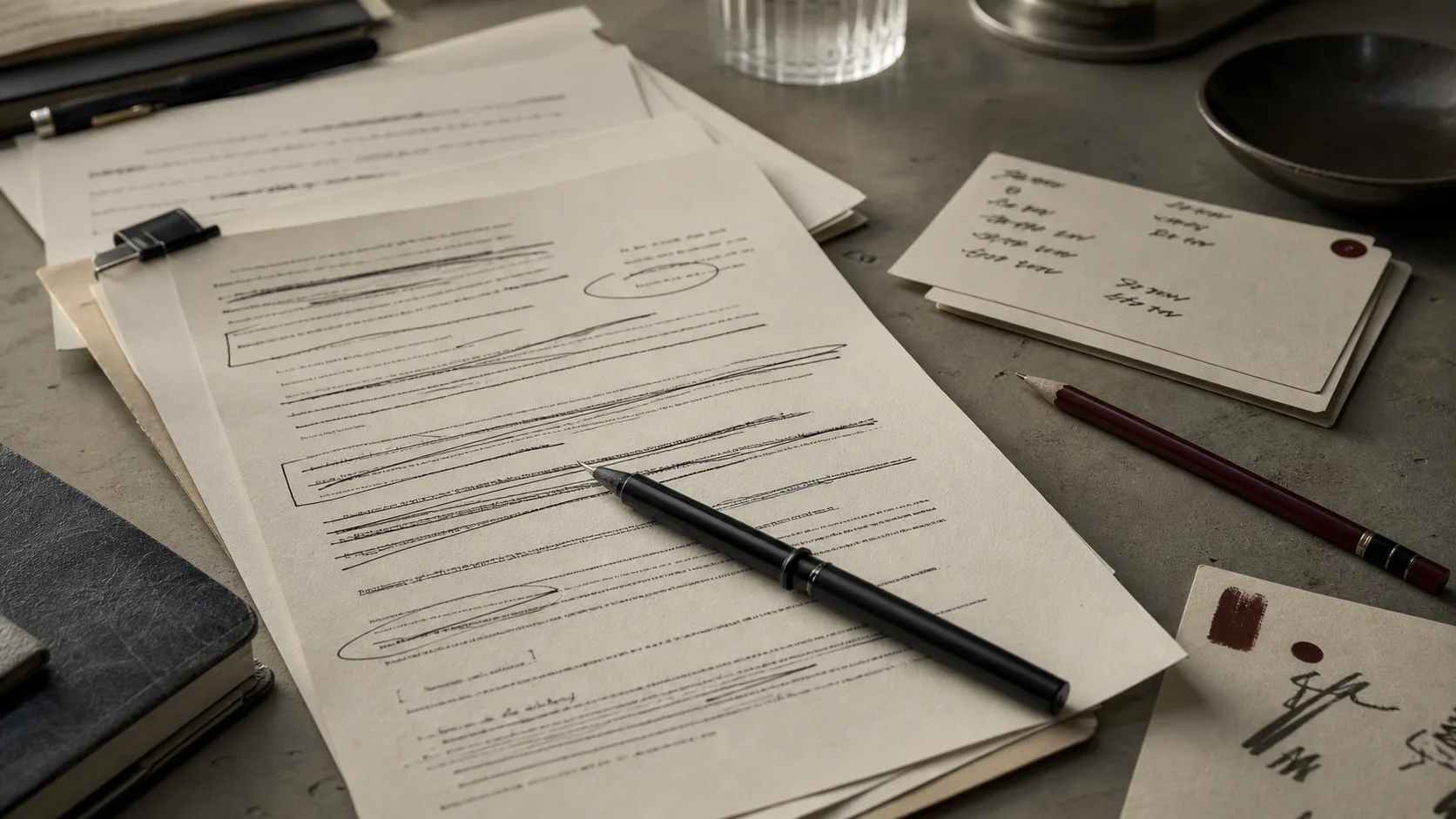
Brand voice is a useful idea until it becomes a disguise for indecision.
When a company says it needs a stronger voice, it often means the writing feels uneven. The homepage sounds polished but vague. The sales deck is direct but too tactical. The product page borrows language from competitors. The founder can explain the company well in conversation, but the written material loses the point by the second paragraph.
That is not always a personality problem. More often, it is a vocabulary problem.
The company has not agreed on the small set of words that should keep showing up. It has not decided which customer phrases are worth preserving. It has not named the words that make the brand sound generic, overbuilt, or too far away from the buyer’s reality.
So every team starts solving the language problem locally. Sales adds urgency because the deck feels flat. Product adds precision because the page feels imprecise. The founder adds more context because the story feels incomplete. Each move makes sense in isolation, but together they create a brand that sounds like several reasonable people answering different questions.
Voice Is Downstream Of Word Choice
Voice is not just whether the brand sounds warm, authoritative, bold, plainspoken, or technical. Those qualities matter, but they are the finish. The more useful question is simpler: what words does this company have permission to use?
A security company can say “trust” all day and still sound empty if it cannot explain the specific risk it reduces. A consulting firm can say “transformation” and lose the room if the buyer is trying to survive a messy operating change. A software company can say “AI-powered” and sound less advanced, not more, if the product value is actually judgment, speed, or quality control.
That last example matters because the fashionable word can hide the useful one. “AI-powered workflows” asks the buyer to admire the mechanism. “Review-ready reports in half the time” gives the buyer a clearer picture of progress. One phrase performs sophistication. The other names the thing a pressured operator might actually want.
The wrong word does not just weaken a sentence. It changes the category the buyer puts you in.
Build A Working Vocabulary
A useful brand vocabulary has three parts.
First, the words customers already use when the problem is real. These are often plain, emotional, and slightly imprecise. Keep them close. They tell you what the buyer is trying to protect. A buyer may not say “workflow inefficiency.” They may say, “We keep redoing the same review,” or “Nobody trusts the numbers until three people check them.”
Second, the words the company needs to introduce. These are category words, mechanism words, and point-of-view words. They help the market see the problem differently. A company might introduce “decision-ready evidence” because it wants buyers to understand that the product is not just faster reporting; it changes what can be decided with confidence.
Third, the words to avoid. Every company has terms that pull it back into the noise. They may be true, but they are too broad to be useful. They may be fashionable, but they make the company sound like everyone else. “Seamless,” “robust,” “end-to-end,” and “transformative” may be defensible in a meeting. On the page, they usually ask the reader to do the company’s work for it.
This is not a thesaurus exercise. It is a strategic constraint.
The Test Is Repetition Without Staleness
Good brand language can repeat without feeling lazy. The same phrases keep appearing because they carry meaning, not because nobody bothered to write another sentence.
That kind of repetition is valuable. It lets the market learn what to listen for. It gives the team a shared language for sales, product, recruiting, and customer conversations. It makes the brand easier to recognize even when the visual system is not present. There is a reason brand builders care about distinctive assets and mental availability: memory responds to repeated cues. Language can become one of those cues when it is used with discipline.
The goal is not to make every sentence sound identical. The goal is to make the important words do consistent work.
A practical test is whether a phrase can survive four settings without sounding forced: the homepage, a sales call, a customer story, and a product release. If the phrase works only in the headline, it may be decoration. If it helps the buyer understand the company in each setting, it is probably carrying strategy.
A Better First Question
Before asking for a new voice, ask which words should earn more responsibility.
Which words name the buyer’s pressure better than the category language does? Which words make the product easier to compare? Which words should appear in the sales call, the homepage, the founder narrative, and the customer story?
Then make the harder call: which words should be retired because they make the company sound expensive in the wrong way, clever in the wrong way, or generic in a crowded way?
When that vocabulary is clear, voice has somewhere to stand.